Tuesday, May 3, 2016
Reflections
This has been a pretty hectic and tough semester for me in all of my classes, but I can honestly say that I've thoroughly enjoyed my experience in Indian Epics. Coming into this class, I hadn't stretched my creative writing muscles since high school, and I was really rusty. After this semester though, I think that I'm not only warmed up again but a much more creative writer than I've ever been. For my first story, I was barely able to come up with enough to say, and it took me a very long time to get through it. Now, I can knock out a thousand word story in under an hour. That's not to mention how much more I know about Hindu mythology now after reading through the Ramayana and Mahabharata. I think the best thing I've gotten from this class though is a new perspective on writing in general, and I think that will make me a better writer in any setting.

Monday, May 2, 2016
Week 14 Reading, continued: Bhagawat
Reading: Bhagawat: The Krishna Avatar, Amar Chitra Katha
So, this section focused mostly on the stories of how Krishna got his wives. He actually kidnapped his first wife from her wedding. Apparently, do that is called Rakshasa Vivaha. Although, she had asked him to do it, I don't know that it really fits with the kind of character Krishna is said to be. However, there are definitely some ancient Hindu marriage customs that I just really don't understand that well.
Anyways, after he kidnapped her, her brother, Rukmi, came after Krishna to get her back. The fight that ensued, from a bystander's viewpoint, was hilarious. As soon as Rukmi caught up, Krishna shot and kill his chariot driver and both his horses. Then, every time Rukmi pulled out a weapon to retaliate, Krishna broke it with an arrow from his bow. It was like the black knight from Monty Python and the Holy Grail. I was just waiting for Rukmi to tell Krishna that he'd bite off his kneecaps. Finally, after Rukmi was beat, Krishna shaved half of his head, including his mustache, as a punishment.
So, this section focused mostly on the stories of how Krishna got his wives. He actually kidnapped his first wife from her wedding. Apparently, do that is called Rakshasa Vivaha. Although, she had asked him to do it, I don't know that it really fits with the kind of character Krishna is said to be. However, there are definitely some ancient Hindu marriage customs that I just really don't understand that well.
Anyways, after he kidnapped her, her brother, Rukmi, came after Krishna to get her back. The fight that ensued, from a bystander's viewpoint, was hilarious. As soon as Rukmi caught up, Krishna shot and kill his chariot driver and both his horses. Then, every time Rukmi pulled out a weapon to retaliate, Krishna broke it with an arrow from his bow. It was like the black knight from Monty Python and the Holy Grail. I was just waiting for Rukmi to tell Krishna that he'd bite off his kneecaps. Finally, after Rukmi was beat, Krishna shaved half of his head, including his mustache, as a punishment.
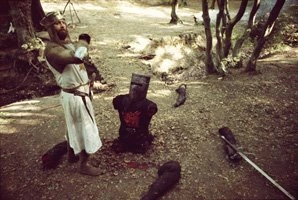 |
| It's just a flesh wound! taken from Monty Python and the Holy Grail - Source |
Tech Tip: Automotivator
I pulled the quote from a set of inspirational running quotes on the Medical Daily site, and the image is pull from justcuteanimals.com. I thought this quote was really appropriate at this time of the semester.
 |
| Image Source Quote Source |
Friday, April 29, 2016
Week 14 Storytelling: Eye for an Eye
"Where am I?" thought the man. He had tried to open his eyes, but he still couldn't see anything. The man tried to move, but he found himself restrained. His hands and feet had been bound by what appeared to be some form of rope. He was able to sit up from what felt like a stone floor. How long had he been here? How did he get here? He couldn't remember. The man looked around him, but still, he saw nothing. He was in complete and utter darkness.
The man shuffled around in place trying desperately to find some source of light, but it was to no avail. "I must be in some sort of cave," he inferred. "But how did I get here? The last thing I remember was... nothing. I don't remember anything! Who am I?!"
"Kamsa... Kamsa..."
"What? Kamsa?" said the man quizzically. Then, it all came rushing back to him. "Kamsa, that's my name. I had been holding a large festival at Mathura, the capital of my kingdom. However, it had just been a ruse to get at Krishna. Krishna! This must be his doing. When I get a hold of - "
"Kamsa..."
"Wait, where is that coming from? Who's there? How did I get here?!" yelled Kamsa, shrinking back. Just then, there was a flash of light and a small woosh as a match was lit. Kamsa was immediately blinded as this new source of light cut through the darkness. As his eyes adjusted, Kamsa was struck with terror at what he saw. There were three man-like creatures with pitch-black skin in front of him. Their mouths were filled to the brim with razor sharp fangs, their heads were adorned with large, twisting horns, and they had long claws extending from their fingertips, but most terrifying of all, they each had dark, black holes where their eyes should be.
The nearest creature spoke up in a hissing voice, "Who we are is of little consequence, but as for how you got here... Oh, I think you know the answer to that question." A horrifying smile spread across his lips.
Then, Kamsa remembered. During the festival, Krishna had attacked him, and they had been engaged in combat. However, Kamsa had been losing, badly. Krishna knocked him on his back, and Kamsa was too beaten to stand back up. Krishna lifted up his hand into a mighty fist, dropped it onto Kamsa's head, and everything went black.
Recognizing the realization on Kamsa's face, one of the demons bellowed, "Hahaha! Welcome to Naraka!" The creatures chuckled in unison moving in around Kamsa. Each of them pulled out a large club, and before Kamsa could say anything, they began to beat him with a wretched rhythm. The beating lasted for several minutes before, unable to handle the pain any longer, Kamsa passed out.
When Kamsa awoke, he looked around. He was unable to move much due to the grievous injuries covering his body, but he seemed be on a conveyor system. At the end of the conveyor was a large metal roller. Next to the roller stood a tall dark figure. Kamsa recognized him from his childhood stories. It was Yama, the god of death.
"Please! I beg of you," Kamsa pleaded. "Have mercy on me! Please let me go, and I will never do wrong again!"
In reply, Yama smiled and flipped a switch turning on the conveyor system.
Author's Note:
This story is based on one of the stories from the Bhagawat about Krishna. In the stories, Kamsa, the main character in this story, is a cruel tyrant, and he is told that one day his nephew will kill him. So, he killed all the children of his sibling, up until Krishna was born, and Krishna was smuggled to a small village to keep him safe. Several years later, Krishna came back and killed Kamsa.
For my story, I wanted to look at what would happen to Kamsa in the afterlife. As Krishna grew up, Kamsa tried to kill him several times, and Kamsa did many evil things besides, so he definitely deserved some punishment after death. The descriptions I gave are based on Naraka, the Hindu hell. In Hinduism, there are different hells for different sins, and I thought Kamsa's actions fit with Tamisra and Shukaramukha which I described in my story.
Bibliography:
Naraka, Wikipedia, link
Bhagawat: The Krishna Avatar, 2000, Amar Chitra Katha
The man shuffled around in place trying desperately to find some source of light, but it was to no avail. "I must be in some sort of cave," he inferred. "But how did I get here? The last thing I remember was... nothing. I don't remember anything! Who am I?!"
"Kamsa... Kamsa..."
"What? Kamsa?" said the man quizzically. Then, it all came rushing back to him. "Kamsa, that's my name. I had been holding a large festival at Mathura, the capital of my kingdom. However, it had just been a ruse to get at Krishna. Krishna! This must be his doing. When I get a hold of - "
"Kamsa..."
"Wait, where is that coming from? Who's there? How did I get here?!" yelled Kamsa, shrinking back. Just then, there was a flash of light and a small woosh as a match was lit. Kamsa was immediately blinded as this new source of light cut through the darkness. As his eyes adjusted, Kamsa was struck with terror at what he saw. There were three man-like creatures with pitch-black skin in front of him. Their mouths were filled to the brim with razor sharp fangs, their heads were adorned with large, twisting horns, and they had long claws extending from their fingertips, but most terrifying of all, they each had dark, black holes where their eyes should be.
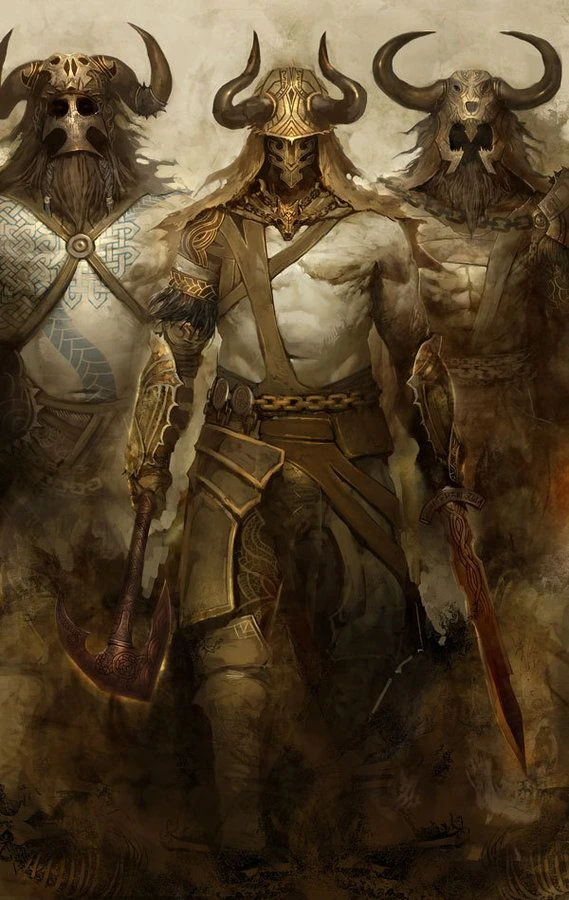 |
| Yamadutas Naraka Wiki |

The nearest creature spoke up in a hissing voice, "Who we are is of little consequence, but as for how you got here... Oh, I think you know the answer to that question." A horrifying smile spread across his lips.
Then, Kamsa remembered. During the festival, Krishna had attacked him, and they had been engaged in combat. However, Kamsa had been losing, badly. Krishna knocked him on his back, and Kamsa was too beaten to stand back up. Krishna lifted up his hand into a mighty fist, dropped it onto Kamsa's head, and everything went black.
Recognizing the realization on Kamsa's face, one of the demons bellowed, "Hahaha! Welcome to Naraka!" The creatures chuckled in unison moving in around Kamsa. Each of them pulled out a large club, and before Kamsa could say anything, they began to beat him with a wretched rhythm. The beating lasted for several minutes before, unable to handle the pain any longer, Kamsa passed out.
When Kamsa awoke, he looked around. He was unable to move much due to the grievous injuries covering his body, but he seemed be on a conveyor system. At the end of the conveyor was a large metal roller. Next to the roller stood a tall dark figure. Kamsa recognized him from his childhood stories. It was Yama, the god of death.
"Please! I beg of you," Kamsa pleaded. "Have mercy on me! Please let me go, and I will never do wrong again!"
In reply, Yama smiled and flipped a switch turning on the conveyor system.
Author's Note:
This story is based on one of the stories from the Bhagawat about Krishna. In the stories, Kamsa, the main character in this story, is a cruel tyrant, and he is told that one day his nephew will kill him. So, he killed all the children of his sibling, up until Krishna was born, and Krishna was smuggled to a small village to keep him safe. Several years later, Krishna came back and killed Kamsa.
For my story, I wanted to look at what would happen to Kamsa in the afterlife. As Krishna grew up, Kamsa tried to kill him several times, and Kamsa did many evil things besides, so he definitely deserved some punishment after death. The descriptions I gave are based on Naraka, the Hindu hell. In Hinduism, there are different hells for different sins, and I thought Kamsa's actions fit with Tamisra and Shukaramukha which I described in my story.
Bibliography:
Naraka, Wikipedia, link
Bhagawat: The Krishna Avatar, 2000, Amar Chitra Katha
Thursday, April 28, 2016
Week 14 Reading, continued: Bhagawat
Reading: Bhagawat: The Krishna Avatar, Amar Chitra Katha
This section of the story deals with Krishna's life as a prince after beating Kamsa. After beating Kamsa, Krishna made up for lost time in his training as a warrior. He and Balarama managed to complete their training in 64 days, and to thank their teacher, they brought his son back from the dead. Also, stereotypical training montage (Although I guess if he did it first, it wasn't stereotypical then.):
Krishna was attacked several times by a relative of Kamsa. Every time, he brought a army numbering in the tens of thousands, and every time, his army was slaughtered. I swear, I keep thinking this book couldn't describe anything more amazing, and it keeps stepping it up.
This chapter is named after the fortress Dwaraka that Krishna makes during this time. However, this section doesn't seem to have a set goal like the previous chapters. The biggest thing it seems to be doing is setting up for Krishna's interactions with the Pandavas. Other than that, it seems to just kind of ramble on with different stories.
This section of the story deals with Krishna's life as a prince after beating Kamsa. After beating Kamsa, Krishna made up for lost time in his training as a warrior. He and Balarama managed to complete their training in 64 days, and to thank their teacher, they brought his son back from the dead. Also, stereotypical training montage (Although I guess if he did it first, it wasn't stereotypical then.):
 |
| Krishna and Balarama Training taken from Bhagawat |
Krishna was attacked several times by a relative of Kamsa. Every time, he brought a army numbering in the tens of thousands, and every time, his army was slaughtered. I swear, I keep thinking this book couldn't describe anything more amazing, and it keeps stepping it up.
This chapter is named after the fortress Dwaraka that Krishna makes during this time. However, this section doesn't seem to have a set goal like the previous chapters. The biggest thing it seems to be doing is setting up for Krishna's interactions with the Pandavas. Other than that, it seems to just kind of ramble on with different stories.
Wednesday, April 27, 2016
Week 14 Reading: Bhagawat
Reading: Bhagawat: The Krishna Avatar, Amar Chitra Katha
Finally get to the story where Krishna fights Kamsa, and it doesn't happen until the very end. On top of that, it barely lasts any time at all. It actually reminds me of Ocean's Eleven in that way. The majority of the story goes over Kamsa's complicated, multi-staged plan to kill Krishna and Balarama, Krishna's brother. Of course, it all failed.
This story was actually pretty gory as compared to the earlier ones. Sure, Krishna had killed enemies before, but his time he's described as decapitating them or wring them out like a wet cloth. More than one's he pulls out his enemy's horns and kill them with them. There was just a lot of fighting in this chapter, and that seems to be the theme of the stories.
I think my favorite of them was when Krishna fights an elephant. He comes up on it at the entrance to Kamsa's celebration, and the elephant attacks him. Krishna dodges it and taunts and teases the elephant for a while. Then, when he tires of the fight, Krishna knocks down the elephant with a single tug of its trunk and kills it with it's own tusk.
Finally get to the story where Krishna fights Kamsa, and it doesn't happen until the very end. On top of that, it barely lasts any time at all. It actually reminds me of Ocean's Eleven in that way. The majority of the story goes over Kamsa's complicated, multi-staged plan to kill Krishna and Balarama, Krishna's brother. Of course, it all failed.
This story was actually pretty gory as compared to the earlier ones. Sure, Krishna had killed enemies before, but his time he's described as decapitating them or wring them out like a wet cloth. More than one's he pulls out his enemy's horns and kill them with them. There was just a lot of fighting in this chapter, and that seems to be the theme of the stories.
 |
| Krishna Fighting an Elephant taken from Bhagawat |
I think my favorite of them was when Krishna fights an elephant. He comes up on it at the entrance to Kamsa's celebration, and the elephant attacks him. Krishna dodges it and taunts and teases the elephant for a while. Then, when he tires of the fight, Krishna knocks down the elephant with a single tug of its trunk and kills it with it's own tusk.
Monday, April 25, 2016
Week 13 Reading, continued: Bhagawat
Reading: Bhagawat: The Krishna Avatar, Amar Chitra Katha
This chapter focused mostly on the story of how Krishna saved his village from a giant storm by holding up a mountain like an umbrella. This chapter consisted of several smaller stories. If I had to pick a general idea tying all of them together, it would be the process of the people coming to respect and even worship Krishna.
Krishna does a lot of things that would get anyone else in trouble, but according to the narrator, he is just testing the villagers. So, when they find out, they end up thanking him in the end. It's a little weird, and I don't know if I can take the idea that Krishna does all the things he does without any other motive than to test his followers. It seems to me like he does a lot of it for fun.
Anyways, it was kind of funny how he fooled the whole village into thinking that their local mountain was a deity. I guess Indra was a little arrogant in expecting worship from the villagers, but I don't think that it was a good idea to get them to expect help from an inanimate object. I feel like I'm split on the reasoning for most of Krishna's actions.
This chapter focused mostly on the story of how Krishna saved his village from a giant storm by holding up a mountain like an umbrella. This chapter consisted of several smaller stories. If I had to pick a general idea tying all of them together, it would be the process of the people coming to respect and even worship Krishna.
 |
| Krishna lifting up the mountain taken from the Bhagawat |
Krishna does a lot of things that would get anyone else in trouble, but according to the narrator, he is just testing the villagers. So, when they find out, they end up thanking him in the end. It's a little weird, and I don't know if I can take the idea that Krishna does all the things he does without any other motive than to test his followers. It seems to me like he does a lot of it for fun.
Anyways, it was kind of funny how he fooled the whole village into thinking that their local mountain was a deity. I guess Indra was a little arrogant in expecting worship from the villagers, but I don't think that it was a good idea to get them to expect help from an inanimate object. I feel like I'm split on the reasoning for most of Krishna's actions.
Subscribe to:
Comments (Atom)